One Word, Infinite Chaos: What Actually Happens When You Shout 'Judge!'

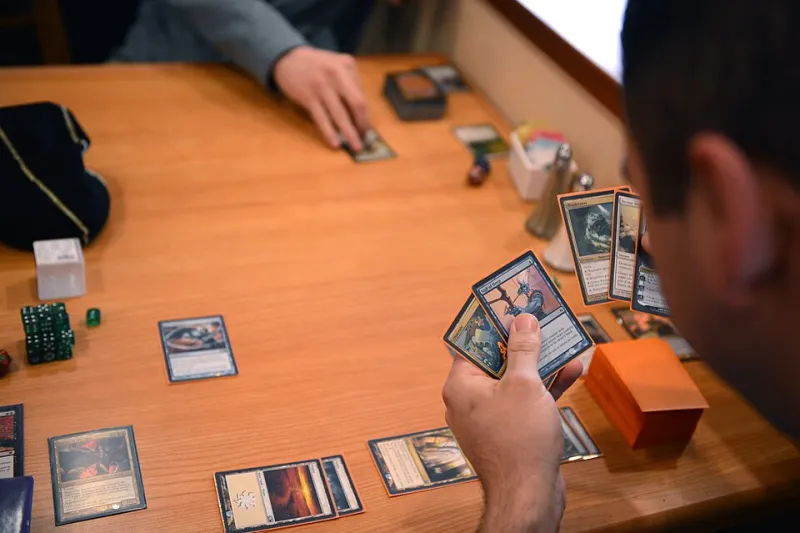
Photo: Wardtcg, CC BY-SA 4.0, via Wikimedia Commons
There is exactly one word in Magic: The Gathering that stops a match dead. Not a card name. Not a concession. Just a single syllable, shouted across a tournament hall with the confidence of a man calling an airstrike: "Judge!"
And here's the thing nobody tells you when you register for your first Competitive REL event: the person who walks over is almost certainly not getting paid. They drove here on their own dime, they're wearing a black shirt that marks them as a neutral party, and they're about to make one player very happy and one player absolutely furious. For free.
The Volunteer Economy of Being Right
Judges are the only people at a Magic tournament who have zero stake in the outcome and no financial incentive to be there. The players are chasing prize money and Planeswalker Points. The store is chasing table fees and box sales. The judge? The judge is chasing the vague satisfaction of correctly applying rule 2.3 and maybe a foil promo card worth less than the gas money it took to get to the venue.
I talked to a Level 2 judge from Ohio — he asked me not to use his name because, quote, "the last article about judges got me a very angry email" — and his summary of the job was bleak in a way I found deeply funny.
"You're a human error message," he told me. "Nobody calls a judge because everything's going well. You only ever show up at the exact moment someone's tournament is falling apart. You are the personification of bad news, and both players resent you for it."
Imagine volunteering your Saturday to be the physical embodiment of a stack trace.
The Slowest Weapon in the Game
Here's where the sacred word gets corrupted. At Competitive REL, calling a judge is a right. It's also, in the hands of a certain type of player, a tactic.
You've seen this guy. He calls a judge every time his opponent taps lands in an unusual order. He calls a judge to "confirm" a trigger that was obviously missed by both players. He calls a judge, and then while the ruling is happening, he sits back, cracks his knuckles, and watches his opponent's blood pressure do a Molten Rain impression.
Every judge call burns three to five minutes on the round clock. Multiply that by a player who does it eight times a match and you've essentially invented a stalling strategy with plausible deniability baked in. Judges can and do issue Slow Play infractions for this. They also know that proving intent is about as easy as convincing an EDH playgroup to cut a solitaire combo.
The judges I spoke to all described the same archetype: the player who uses the judge as a pause button. One of them put it perfectly: "The rules exist to protect the game state. Some players use them to protect their win percentage. Same rulebook, different religion."
The Worst Rulings Are the Correct Ones
Ask any judge about their worst call and they won't describe a hard decision. They'll describe an easy one that ruined someone's day.
The classics: the player who drew extra cards and has to take a Game Loss at a PTQ. The guy who had a counterfeit card in his deck and didn't know — or claims he didn't. The infamous missed trigger that a player had to enforce against a twelve-year-old because the opponent, within his full rights, called it. The judge makes the correct ruling, and the correct ruling is a small funeral.
"The worst one I ever gave," one judge told me, "was a Game Loss for Decklist problem at a Regional. Kid wrote the wrong number of lands. Clear as day. He looked at me like I'd personally unplugged his life support, and the worst part is I agreed with him. I just also had the rulebook."
This is the deal judges sign up for: they absorb the emotional damage so the game can stay a game. Every fair ruling that ends someone's tournament is a sacrifice play for the integrity of a cardboard-based hobby. Somebody should buy these people a beer. Instead we ask them to also rule on whether a missed Narset trigger counts as "intentional."
How to Call a Judge Without Being That Guy
A brief public service announcement, because someone has to say it:
- Call a judge for actual rules questions. That's the whole job. Nobody worth respecting will judge you for it.
- Don't announce your ruling strategy to the table. "I'm calling a judge unless you concede" is not a flex, it's a confession.
- Accept the ruling and move on. You can appeal to the Head Judge. You cannot appeal to your own sense of grievance while the round clock bleeds out.
- Say thanks. They're volunteers. They heard your opponent lie about a Pithing Needle naming five minutes ago. They sorted it out anyway.
The Word That Outlives the Game
Here's my actual hot take: the judge call is the most underrated piece of Magic's culture. Every competitive hobby has disputes. Poker has floor managers. Chess has arbiters nobody can find. Magic built a system where a random volunteer with a rules binder will sprint across a convention center because you said one word, and the ruling gets written down, and both players can hate it equally and move on.
It's beautiful, in a dysfunctional family kind of way. The system works precisely because the people running it get nothing out of it except the black shirt and the faint smell of a hotel ballroom.
So the next time you shout "Judge!" across a tournament hall, remember: you're summoning an unpaid referee, a part-time therapist, and the only person in the building who actually read the Comprehensive Rules cover to cover. Treat them accordingly.
And if you're one of the guys using judge calls as a stalling mechanism — we see you. The judges see you. Your opponents definitely see you. The only person who doesn't see the problem is you, and honestly, that tracks with the rest of your playstyle.