Ninety Seconds to Live: How to Read an EDH Table Before Turn One
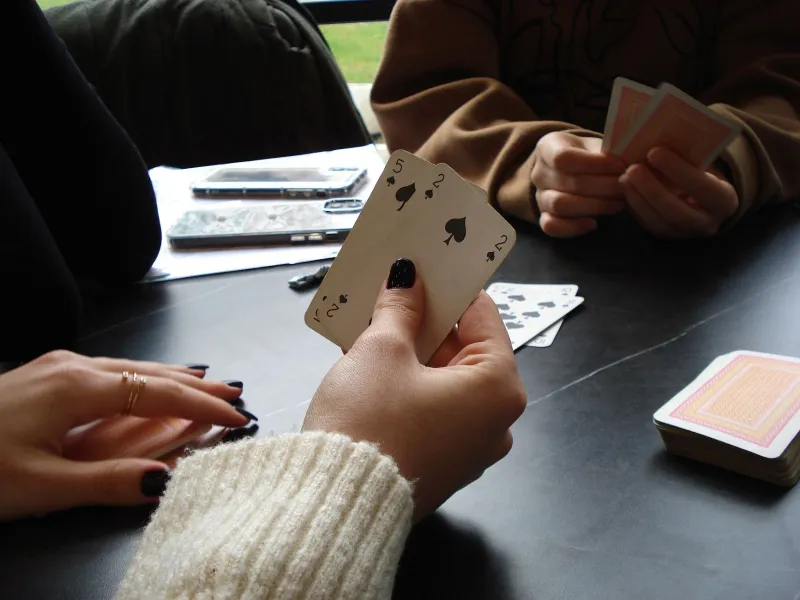
You've done it a hundred times. You sit down at the Commander table, exchange pleasantries, shuffle, mulligan, and spend four turns attacking a player who turns out to be irrelevant — while the quiet person in the corner untaps into a combo and everyone else says "gg, that was fast."
The information was there the whole time. You just didn't look.
Table reading in EDH isn't some psychic gift. It's a skill, and like any skill, it can be speedrun. Here's the framework I use every single game, in order, before the first land drop.
Seconds 0–20: The Pre-Game Chatter Audit
Listen to what people say while shuffling. It's the cheapest intel in Magic.
- "Nothing too spicy tonight" is a lie 80% of the time. The 20% where it's true, the speaker is holding a cEDH deck anyway.
- "I brought my jank deck" means "I brought a deck that wins on turn six instead of turn four."
- The person who says nothing and just watches everyone else? That's your most experienced player. Silence is a flex.
- Anyone who volunteers their win condition unprompted either has a fragile one they're embarrassed about or an unbreakable one they want you to respect. Both are data.
Also clock the deck boxes. The double-sleeved perfect-fit with custom art is a different conversation than the worn Dragon Shield with a gym membership card as a divider. Neither is automatically scarier — but they're different kinds of scary.
Seconds 20–40: The Opening Hand Poker Read
Once hands are drawn, watch the mulligans like a hawk. This is the most underrated information window in casual Magic.
A player who keeps seven and immediately starts arranging lands has a smooth curve and knows it. A player who keeps seven and doesn't touch their cards is either reading the table or holding something they don't want visible on their face. Note who glances at whose hand-zone. The player who peeks at their hand, then at the combo player's face, has already started the game three turns before you have.
Mulligan tells are gold: someone going to six and then five is struggling — that's your political capital target later, the player you can safely pressure or safely ignore depending on what the rest of the table looks like. Someone who snaps-keeps six? That's either garbage or a two-card combo plus a way to protect it. Ask them, lightly: "Good one?" The confident "yeah" and the mumbled "it's fine" are very different animals.
Seconds 40–70: The Land Count Census
Here's the boring, brutal math nobody wants to do: count lands and rocks every turn for the first three turns. It takes four seconds. It wins games.
- Rocks before turn three on everyone means the table is fast and the real clock starts early. Your five-drop plan is a suicide note.
- One player flooding lands while everyone develops rocks is the archetypal control player. They're not behind; they're loading.
- The player stuck at three lands with a full hand is the natural political ally. Feed them a little, keep them alive as a speed bump, and remember that a topdecked Cultivate erases everything you thought you knew.
The classic trap: you attack the land-flooded player because their board looks biggest. Their board looks biggest because they're spending zero cards defending it. Meanwhile the three-land player with five cards in hand is one Rampant Growth away from your worst night of the month.
Seconds 70–90: The Eye Contact Economy
Commander is a negotiation, and the negotiation starts with who looks at whom.
The moment someone resolves a piece of interaction or tutors, watch the table's eyes. Whoever makes eye contact with the threat player is forming a coalition. Whoever avoids eye contact is either checked out or hiding their own engine. The player who jokes "don't worry, I'm not the threat" while holding up two mana has read the table better than anyone — they've already assigned you the villain role and excused themselves from the plot.
And that's the move to steal. Threat assessment is a marketing exercise as much as a math one. The best players at casual tables aren't the ones with the best decks; they're the ones who get someone else declared the problem while they quietly assemble. You want to be the person whose board state gets described as "eh, it's fine" right up until it isn't.
The Framework, Compressed
- Listen to the pre-game talk and note who's performing.
- Watch mulligans and hand behavior before the first land hits.
- Count lands and rocks through turn three — actual numbers, not vibes.
- Track the eye contact graph and figure out who's already allied.
- Reassess every time a tutor, wheel, or rhystic anything hits the stack.
None of this requires a high-powered deck. It requires ninety seconds of attention that most players at your LGS simply aren't spending, because they're too busy explaining their deck's theme to someone who didn't ask.
Is this ruthless for a "casual" format? Sure. But casual doesn't mean oblivious, and there's nothing friendly about getting comboed out on turn five for the fourth Friday in a row while the actual threat sat unmolested, making small talk about the new Pokémon set.
Read the table. The table is already reading you.