Dying on Turn Three Is a Gift: What Combo Players Understand That You Don't
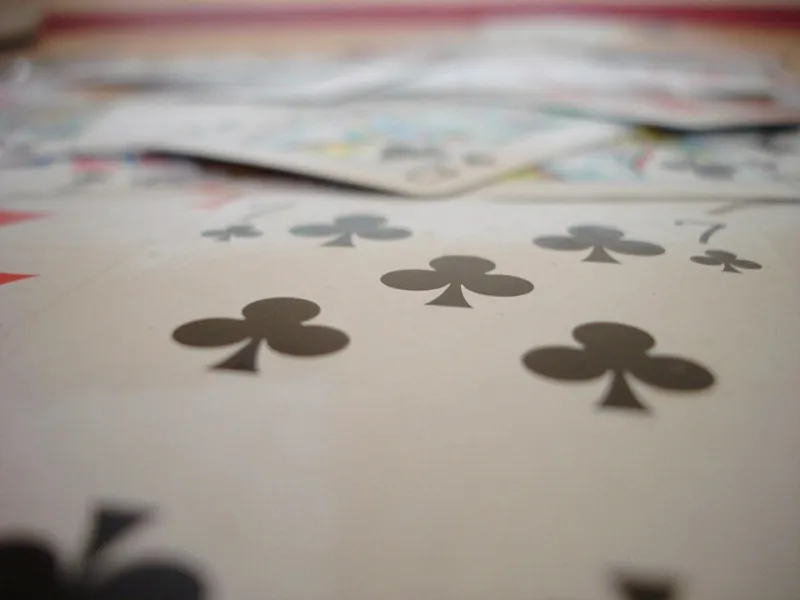
Photo: Siddharth Patil, CC0, via Wikimedia Commons
Somebody at your table is shuffling up a deck that will end the game before you resolve your third spell. You know this. They know this. Everybody quietly knows this, and yet the storm player sits down every week like a guy who keeps adopting pit bulls with documented histories. Everyone asks the same question: why?
Here's the answer nobody wants to hear: because dying on turn three to a beautiful, illegal-feeling sequence of cards is more honest than ninety minutes of both players drawing lands and pretending it's a game.
The Fair Game Is a Lie
The complaint about combo is always framed in terms of fairness. "I didn't get to play Magic." Buddy, you were on the play against a deck that needed seven cards to go off and you kept a hand of five interaction-free goodness because the flyer looked good. That's not a tragedy. That's a math problem, and you flunked it.
But let's go deeper. The fair game — the one where two midrange decks trade removal spells for eight turns until someone's planeswalker gets there — isn't some neutral baseline of what Magic should be. It's one aesthetic choice among many, and honestly? It's the boring one. It's the ESPN highlight of a 0-0 draw. The fair game is a grocery run with extra shuffling.
Combo decks understand something the fair decks refuse to admit: Magic is a game about finding the broken thing before your opponent finds theirs. Every deck is a combo deck. Some of them are just in denial about it, using a value engine and a board wipe instead of a win condition and a dream.
A Brief Museum of Crimes Against Fun
Let's pour one out for the banned legends:
Necropotence. Draw forty cards, pay with your life, win the game while technically dying. Banned in Standard for the crime of being better than everyone else's deck, which is technically the whole point of deckbuilding.
The Breakfast Combo / First Turn Kills in Legacy-adjacent spaces. Decks so fast they made tournaments feel like muggings with a pairings sheet.
Second Sunrise. Eggs. A deck where you cracked artifact after artifact like a raccoon at a dumpster until the whole thing collapsed into a win. When it got banned, Wizards said the word "unfun" out loud, and a generation of players learned that fun has a compliance department.
Fractured Identity of the modern era: decks like Izaret-adjacent and various Modern boogeymen — every few years something gets axed not because it was unbeatable, but because it was rude. Rude! The cardinal sin of card games, apparently, is making your opponent feel feelings.
And here's the punchline: every single time, the community rebuilt the deck. Different cards, same skeleton, same hungry eyes. Ban the storm pieces and someone shows up with a new engine within a season. You cannot ban a philosophy.
The Psychology of the Glass Cannon
The combo player has made a deal that the fair player is too cowardly to make: total commitment. A glass cannon deck doesn't have a plan B because a plan B is a confession. When the storm player shuffles up, they are saying I believe in this deck with my whole chest and my entire win rate.
There's a term in poker for this — being "results-blind" is the amateur version, but the real thing is having a style. Combo players have a style. The fair player has a spreadsheet. When a combo player wins, it's a heist movie. When they lose, it's a heist movie where the plan goes wrong and everyone dies, which is frankly a better movie.
Compare that to the fair player's emotional range: won a close game, lost a close game, complained about mana. One of these people is living.
But My Playgroup
Ah yes, the playgroup. The sacred social contract, where the real rule is "nobody wins in a way that makes anyone think." Look — Commander is a casual format, sure. But there's a difference between a deck being oppressive and a deck being decisive. If your pod can't survive a turn-four win, the problem isn't the deck, it's that your pod has exactly one answer to everything: asking the combo player nicely to stop.
Run interaction. Run a counterspell like an adult. The glass cannon is only a friendship-ender when nobody at the table bothered to pack a shield because shields aren't fun. You know what's not fun? Losing. To anything. That's the game, actually.
Rebuild the Forbidden Deck
Here's my thesis, stated plainly: combo decks that ruin friendships are Magic's design space running at full throttle, and every ban list is a museum of ideas the game was too scared to keep. The reserved list gets all the attention as Magic's sacred cow, but the ban list is the real altar — the place where the game's most interesting thoughts go to be sacrificed on the grounds of vibes.
The storm player keeps coming back because they remember something the rest of us forget between games: this is a game of near-infinite possibility, and someone, somewhere, in 1997, looked at a pile of cards and found a way to win before their opponent finished saying "lands." That's not degenerate. That's the dream, wearing a trench coat.
So build the stupid, beautiful, friendship-ending deck. Goldfish it until your win rate is a religious statistic. Lose horribly on the turns you lose and win so fast on the turns you win that people have to replay the game in their heads to understand what happened.
The fair game will still be there when you get back. It's not going anywhere. It never does anything.